Saturday, August 27, 2022

REFLECTIONS: GROUP CAPTAIN MADHAV KHASHAV, VSM, IAF (Retd)


REFLECTIONS: GROUP CAPTAIN MADHAV KHASHAV, VSM, IAF (retd) 


 The Lawrence School, Lovedale will be celebrating Founder's on September 4 to 6, 2022 after a break of two years due to the Covid pandemic. Naturally, Old Lawrencians (OLs) both young and old, are looking forward eagerly to visit their Alma mater. Some are visiting for the first time as OLs, some for anniversaries like the 10 th, 25 th and so on. One gentleman appeared to me to be more eager than most. 

He is the dapper Group Captain Madhav Khashav, VSM, IAF Retd, who was in the Hope Grant House in the old Lawrence Memorial Royal Military School in 1949 and 1950. This means he is going back to the School he joined 73 years ago! This is a longer period than most of us have lived!! 

Gp Capt Khashav was born on June 4, 1936. He joined Lovedale under rather dramatic circumstances. His father was a Major in the British Army stationed in Hyderabad (then ruled by the Nizam). In 1948 he got wind of a plot to attack his home and family by the marauding Razakars. Khashav and his younger brother Kamal were bundled off to Guntur with an armed escort. Later, they found their way to Lovedale, where they were known as the Naidu brothers. 


The WhatsApp Group created by the OLA for Karnataka OLs has 343 members as of date. Considering his age, Gp Capt Khashav's enthusiasm for participating in this group - and indeed in anything to do with Lovedale - is quite amazing. This is reflected in his willingness to share his reminiscences of his schooldays with us. 

In those days conflicts amongst boys were settled in a "comb"- short for "combat". The two boys fought until one gave up. Khashav got into a comb. with a boy much bigger than himself and knocked him out, thereby earning the nickname "Wild Billy Hicock"! Kamal naturally  became "Wild Bill Junior"! 

A significant contributor to "Glimpses...." he recalls Sgt Major E J Nicholls in the January 2022 episode of "Glimpses of a Glorious Past: An Informal History of The Lawrence School, Lovedale". At that time Major A V Richardson was the Principal. 

Likewise, in the March 2022 episode of "Glimpses of a Glorious Past" he speaks of the Founder's Parade of September 6, 1949 when the Union Jack was ceremoniously trooped out and laid to rest. It was on this day that the Indian Tricolour was trooped for the first time in the history of the School.  Owing to his inability to speak at length at that time, his contribution was read out by me (Prem Rao, Class of 1967). 

Gp Capt Khashav was one of just 15 selected in the UPSC examination for entry to the Indian Air Force. He was in the Joint Services Wing (JSW) 9th Course at Dehradun  and commissioned in the Indian Air Force as a fighter pilot in 1956. In the course of his service, he fought in the 1965 and 1971 Wars against Pakistan. 

                                                          Sqd. Ldr Khashav 

He recalls how in the 1971 War he flew 22 combat missions against heavily guarded targets in Dacca, Chittagong and elsewhere in the erstwhile East Pakistan. At one time, he says, his squadron was operating from the captured Jessore airfield where there were more Pakistani POWs than IAF and Indian Army personnel! 


                            Khashav stands in the extreme right in this picture from 1971. 

He was awarded the Vishisht Seva Medal for distinguished service in 1970 and Mentioned in Despatches for his part in the 1971 War. He served in the Indian Air Force till 1982 carrying out different responsibilities that included training fighter pilots in Egypt and commanding the frontline airbase at Awantipur.

Then followed an illustrious career in civil aviation where he trained pilots in different parts of South East Asia. He set up the Indira Gandhi Rashtriya Uran Akademi to train pilots for Air India and Indian Airlines, set up a Training school in Brunei, and was the Principal and GM of the Malaysian Flying School which trained pilots for different airlines from Malaysia, Indonesia, Thailand and Japan.  

When asked what he had gained from School, Gp Capt Khashav  says, "All through my long life, I have kept in mind what I imbibed as a young lad at The Lawrence Memorial Royal Military School, Lovedale. I gained confidence in myself, learnt to stand on my own feet, take initiative and work towards my goals with passion to succeed. The spirit of "Never Give In" has stayed with me in all these decades. This has held me in good stead in trying circumstances -in war and in peace."  

On September 6, 2022 watching the Founder's Day Parade with keen interest will be a gentleman who, as a young boy, had been on parade on the same Top Flats parade ground 73 years ago! 

Pictures courtesy: Group Capt M. Khashav. 


Saturday, August 13, 2022

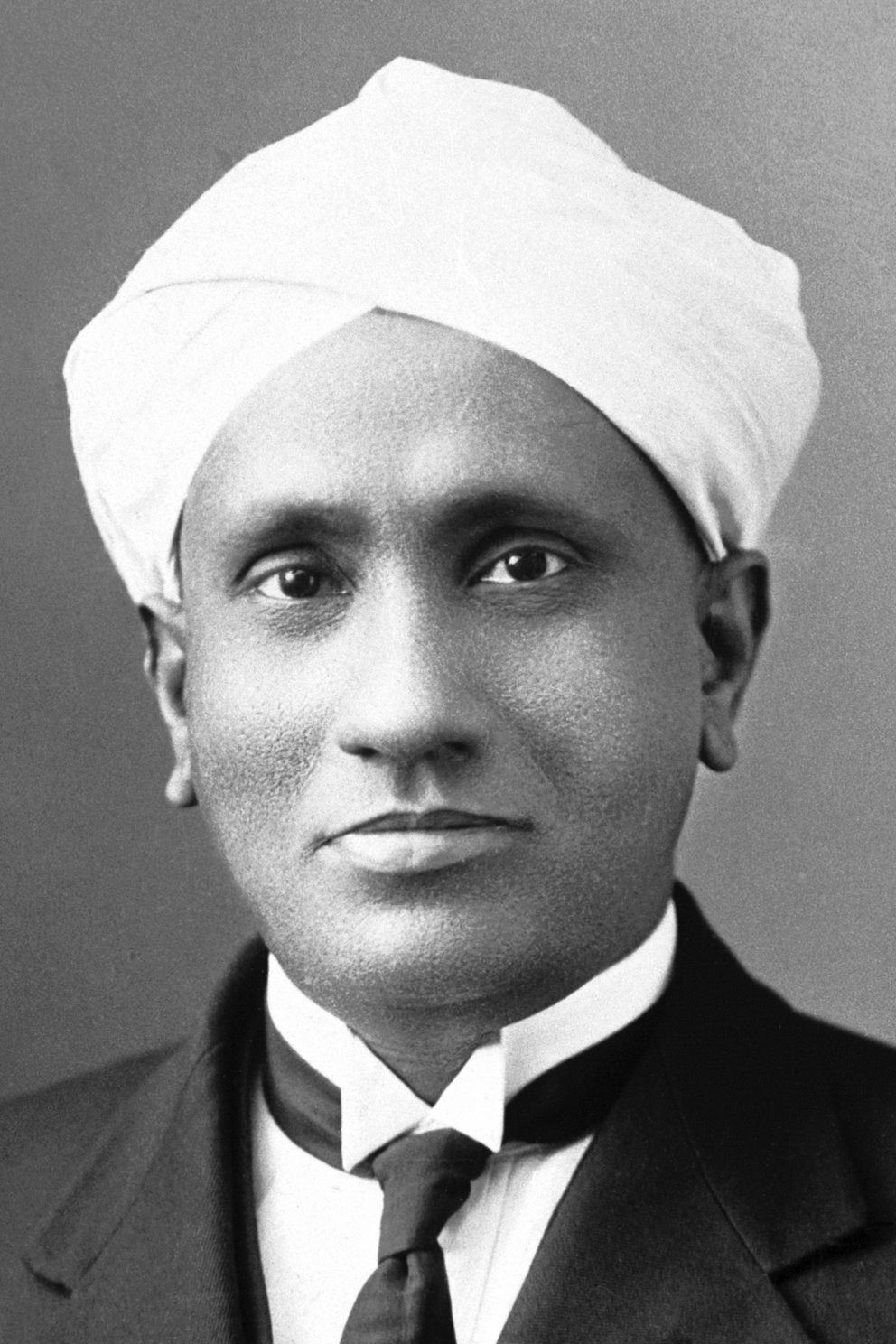
SIR C V RAMAN AT LOVEDALE

SIR C V RAMAN AT LOVEDALE

Did you know the Science Society in our School was inaugurated by one of the most famous scientists of his time in the world? 

On October 17, 1950 the staff and students of The Lawrence School, Lovedale had the pleasure of interacting with Nobel laureate Sir C Chandrasekhara Venkata Raman (1888-1970) when he visited Lovedale. 


The story of how he was fascinated by the blue waters of the Mediterranean Sea on his voyage from England in 1921 is too well known to be recounted here. This, of course, led him to an important scientific discovery 

He was elected to the Royal Society of Science in 1924. In 1928 he discovered what came to be known as The Raman Effect and became the first Asian and non-white to be awarded the Nobel Prize for Physics in 1930. He was knighted in 1931.

In his speech at Lovedale, he told the students, “In this place you enjoy remarkable privileges, which are denied to people elsewhere. The first requisite for the pursuit of science is a good body. Lovedale has a very bracing climate, which is best suited for physical activities. The one day that I have spent here has made me much younger than what I am.  I was very much impressed by your physical display yesterday. At this juncture let me point out that physical activity is not a contradiction to intellectual activity, as some people take it to be.

It is extremely fortunate for you that your school should be on the Nilgiris, which I call the charming Face of Nature. It calls for love and devotion. Science is not to be found in books and in laboratories. You find time for scientific study. Inspiration comes first-hand from nature. It is rather unfortunate that the Universities try to convey a different idea about science.

I am happy to find that you are entering into the realms of Science when you are quite young. The History of Science has shown the use of being youthful. In fact, if a man does not accomplish something before he is forty, the chances of his achieving something later on are very little. The desire to see, enquire is manifested in the youth. The mind, heart and outlook should be youthful for scientific pursuits. That is the spirit of Science. If you maintain the freshness and enthusiasm that you possess now for ever, you can go far into the realms of Science.”

The staff and students at Lovedale - like millions of Indians- rejoiced when Sir C V Raman was awarded India's highest civilian honour- the Bharat Ratna in 1954. 


This video from
 Doordarshan archives gives insights into Sir C V Raman's love for nature, and his philosophy and approach towards science. 

Sir C V Raman was a great teacher and visionary. He was lauded for his simplicity and deep understanding of human nature. 


I believe some of his quotes have as much relevance now- 50 years after  his death- as they did when he first pronounced them. 


"Ask the right questions and nature will open the doors to her secrets"


"You can't always choose what comes into your life but you can learn what lessons they teach you"


"Success can come to you by courageous devotion to the task lying in front of you." 


Wednesday, July 27, 2022

"Pothe!" A Tribute To Pratap Pothen (1952-2022)


"Pothe!" A Tribute To Pratap Pothen (1952-2022) 

The world lost a talented film actor and director- and I a dear old friend-  with the passing away of OL Pratap Pothen,  Class of 1968, on July 15, 2022. 

There have been many tributes paid to him praising his acting and directorial skills. The aim is not to list all of them but two stayed in my mind: I liked Anand Kochukudy'a article calling him the "Original Hippy of Malayalam Cinema" and Suhasini Maniratnam's straight from the heart personal tribute , "Farewell My Dear Friend Prathap" in The Hindu. She describes him as an "adorable eccentric" in this tribute to him on India Ahead. 


 It was my good fortune to have known him well since 1959 when I joined The Lawrence School, Lovedale, in the 3rd Std in Prep School. At age 7, leaving home and going to stay alone in a school far away was a totally new experience for me. Pratap, already a boarding school veteran having joined in the 1st Std took me under his wings and we remained close friends ever since.


He was one of the most creative persons I have known. I think he exhibited this trait all through his schooldays (1957-68) at Lovedale.

In 1961, when we were in the 5th in Mr K C Jacob's Kailas House, our Housemaster "Jakes" asked us to put up an entertainment show with performances of different kinds. Pratap directed and acted in a skit propounding the benefits of the well known Eno Fruit Salt. When he shouted, "Oh no!" he, S N Mohanty and I - who made up the cast- had to hold our guts, moan, and make a sick face, as if in agony. This was repeated a few times till the audience too must have got sick of it. On the shout of "Eno!" we had to be magically transformed as the fizzy Eno did its trick, and become happiness personified.

After being together in Prep School and Kailas House, we went different ways for 6th and 7th - he to South Block and Siwalik, I to North Block and Himalaya. 

We were re-united in the 8th in Mr W J "Mac" McMahon's Nilgiri House. 

Older OLs of the 60s and 70s may remember that in the mid 60s, Hindustan Lever brought out an innovative toothpaste called "Signal" with its distinctive red stripes. Mr Mohammed Naeem ( known far and wide naturally as "Neem") was teaching us Health Science. He held forth at great length about Rana tigrina ( the common frog). Male staff in Lovedale in those days taught in suits. The one that Neem wore that day was quite natty- a dark black- grey with thin pin stripes in red. 

As was the custom those days, Pothe (as he was called affectionately by us) raised his hand to ask a question. "Yes, Pothen? What's your doubt?" asked Mr. Naeem.

With a most innocent look the skilled actor that he was even in those days, Pothe asked, (pointing at Mr Naeem's suit) , " Sir, those red stripes!! Do they contain hexachlorophene?" 

In our school days, we used to write home every week. Our letters- almost universally - went along the lines of, " My Dear Father, How are you? I am well and happy here!" 


                                                       Nilgiri House ISC 1968 with Mac

Our House Master, "Mac" insisted that we maintain this habit during the holidays and write to him every week! One year on our return to school, Mac addressed us, " I received letters every week from all of you. Some of them were quite interesting! The most interesting of them all was from Pothen. He wrote to me on June 28 and said, " How are you, Sir.? I am waiting to see you in three days. I hope you received my letters of June 21, June 14, and June 7! " I must say, Pothen, you have demonstrated the skilful use of the calendar.!" 

Lovedale and the school were always close to his heart. He was an integral part of the Class of '68 and took part in most of their re-unions. This picture of their 50th Year Reuinon at Lovedale- like the others in this post- is through the kind courtesy of Viju Parameshwar, also of the Class of '68 and also of Nilgiri House. 


Pothe was fun loving, creative, and lived life ( as he famously sang) "In My Way"! 

I know you will want us to laugh with you all the time, Pothe! Stay blessed wherever you are, old friend. 

Saturday, July 9, 2022

MR.I D N SAHI, ICS- FORMER CHAIRMAN OF THE BOARD OF GOVERNORS: A TRIBUTE

 MR.I D N SAHI, ICS- FORMER CHAIRMAN OF THE BOARD OF GOVERNORS: A TRIBUTE

It's been our endeavour in the OLA Glimpses Team to seek out contributions about the School and people associated with it from beyond our small group of contributors.

I was therefore delighted to hear from Mr Sushil Sahi, who writes about his father the late Mr I D N Sahi, ICS. The pictures used were also sent by him.  

Mr Sahi, a distinguished Civil Servant was the Chairman of the Board of Governors of our School from 1972 to 1974 -when he was the Secretary, Ministry of Education of the Government of India.

 Mr Indra Deva Narain Sahi  was born on 27th September, 1916.  He joined the ICS in 1940 as Sub Collector, Tinnevelly in erstwhile Madras Presidency. In 1947, he was sent back to his home state, Uttar Pradesh, and posted to Saharanpur. After serving in various capacities, his final posting was as Secretary, Ministry of Education,( later known as HRD Ministry), from 1972 - 1974. On his retirement, Mr Sahi settled down in "Sunnybank" his home in Lovedale. He passed away on 20th November, 1986.


Sushil Sahi writes, " 
He had given a formal and legal identity to The Lawrence School, Lovedale, by saving the vibrant 750 acre estate for the School.  The formal identity of the School is Nature, which continues to attract OLs back to Lovedale, and helps to make the children future ready in this time of climate change, habitat loss and biodiversity destruction.  The detail of the interaction within the regional and Central Govts for the legal identity of the School is given below


The Land Ceiling Act of 15th February, 1970, applied to agricultural and religious land.  Amar Farms was established by/ and in memory of Lt. Gen Dev, who had long standing connections with the School.  About the year 1972 or 1973, then TN Govt. Collector of Nilgiris decided that 750 acres belonging to The Lawrence School, Lovedale was far in excess of the 30 acres permitted under above law

If I am not mistaken, bull dozers appeared in the premises of Prep School to bring down the building.  According to the 30 acre rule, this fell outside the limit of 30 acres, apart from other areas of the School grounds

Mr Vyas, the Headmaster, rushed to Delhi to meet Mr Sahi, to seek his help in preserving the land for the School.  Mr Sahi then had quite a few meetings with the officials of the Ministry of Defence and Law Ministry.  It was imperative to preserve the heritage and all the land belonging to the School.  At the end of these deliberations, a solution was found - The Ministry of Defence would own the entire estate and would lease the land of 750 acres with the School buildings to the Education Ministry ( now HRD Ministry ) at the rate of Re.1/- per annum.  The lease is to run for 99 years.  This procedure then saved the land from being taken over by the TN Govt

Once, during the tenure of Mr Vyas as Headmaster another problem had arisen. This was the time of Sri Lankan Tamils seeking refuge in India.  They came in large numbers.  Many of them travelled to the Nilgiris to seek shelter.  The District Administration decided that Lawrence School land, toward Dhobi Ghat would be an ideal place to relocate all refugees coming to the Nilgiris from Sri Lanka.  Understandably, Mr Vyas was most concerned about the safety of the children, mainly and of course School property.  He had to again seek the help of the Ministry of Defence, as also the District Administration to resettle the Sri Lankan refugees elsewhere. They were finally shifted in Valley View, Lovedale.

I do hope you will incorporate this write up in the ebook.  As I mentioned, the Chairman was the serving Education Secretary in my Father's time.  This made it possible to obtain the good offices of the other Ministries in finalising the legal identity of The Lawrence School. Lovedale. "


         Mr I D N Sahi as the Chief Guest, Founder's Parade, 1970s

Sushil Sahi studied briefly in Lovedale from 1974 to 1976 then went to the Doon School where he did his ISC. He has taught in many Schools including The Lawrence Schools at Lovedale, and Sanawar. He was the Principal of the Riverside Public School in Kotagiri. 

By a happy co-incidence, Father's Day was celebrated last month. I would like to think this is a small yet meaningful tribute by a son to his illustrious father! 

Like Sushil Sahi, if you wish to send in a piece relating to The Lawrence School, Lovedale and people associated with it, please do contact us at: olalovedale@gmail.com with the subject line: "For Consideration: Contribution to Glimpses"
- 


Saturday, June 25, 2022

THE CRUCIAL YEARS 1947-1949

 THE CRUCIAL YEARS 1947-1949

In the last post, we saw how the future of the School was very uncertain in 1946. With the Independence of India around the corner many students of both British and Eurasian ( as was the term commonly used for Anglo-Indians those days) lineage left to go to the UK, Australia, and even the United States.

 It must be remembered that till 1947 there were no Indian students in the School at all. The first student who was not British or Eurasian, to be admitted to the School was Humayun Dhanrajgir. He is listed in the School Admission Register as being admitted on June 10, 1947. The first Indian girl to join the School was Komala/Kamala Reddy who joined on March 2, 1948 along with Malathi Reddy. 

Three days later, one of our key contributors for Glimpses- Kevin Joseph Phillips, ARA 1956, joined on March 5, 1948. 

 At that time there was considerable opposition in political circles to the continuing of institutions perceived to be elitist English schools. It was widely feared that schools such as Sanawar and Lovedale would be closed down in the new milieu of an independent India. One of the School's distinguished Headmasters, Mr L A Vyas has publicly acknowledged the role of Independent India's first Minister of Education, Maulana Abul Kalam Azad (1888-1958) in the decision to keep the schools going.


In 1948, at a crucial juncture, the fortunes of the School were saved by the recommendations of the Rao Committee -comprising Mr P V R Rao, ICS, Mr J Dayal, Mr M S Sundaram, and Brigadier J H Wilkinson -appointed by the Government of India to "examine the Future Organisation of The Lawrence Military Schools."

They recommended vide their report dated May 31, 1948: "....we are satisfied that there are facilities to run a first class public school in Lovedale...... for any public school to run efficiently and economically it must have at least 300 pupils on its rolls.....many of the current 300 may be expected to be removed from the school shortly.......we feel if a public school open to all without restriction of nationality or creed is available in the Nilgiris it will meet a long felt need.........it is essential that admission to a public school run by the Government should not be confined only to those rich persons who can afford to pay the high fees to the extent of Rs 1200 per annum ..........we recommend therefore that the Government must  accept liability to educate free of cost or at concessional rates at this school, a limited number of children who on merits are capable of benefitting by a public school education but whose parents are unable to afford the necessary expenditure. "  

The Lawrence Schools at Sanawar, Mt Abu, and Lovedale, had different histories and issues at this point in time.  The one at Sanawar had always been directly administered by the Crown while Mt Abu and Lovedale were administered by Trustees who owned considerable assets. The Trustees governed the Schools through the Boards of Governors which had representatives of the Government of India. Funds for the schools by way of grants in aid came from the Ministry of Defence, through Army HQ. 

The Government of India decided that the Schools would be managed by the  Ministry of Education effective May 14, 1949. In Mt Abu, at that time, most of the staff and students had left the School. The Trustees concluded there was no way they could continue to run the School with their limited resources as the grants in aid were a factor of the number of entitled children in each school. The Government of India decided to close the School in 1950. The facilities and campus were then used to house the Police Training College.

In the case of Sanawar, things were much easier. The Ministry of Defence passed on control to the Ministry of Education as the Government owned all the assets including the land. 

Lovedale was a different case as the Trustees owned the buildings and other assets but not the land which always was owned by the Government of India. Consequently, the Government of India held negotiations with the Trustees and took complete charge of the School after agreeing that they would bear the expenses of the entitled children as long as such entitled children remained on the rolls of the school. The expression " entitled" children was used for the orphans of British military personnel, and children of British military personnel who died during service in India.  

An article in "The Lawrencian" in 1950 reported: " The Board of Trustees and the Board of Governors therefore wisely decided to hand over the institution to the Government of India with its assets and liabilities on the condition that the "entitled" children will continue to get the facilities which they were enjoying heretofore. The actual hand over took place on May 14, 1949. The Government of India decided to run the institution as a public school for boys and girls and have also changed the name of the School to "The Lawrence School, Lovedale, (Nilgiris)" 

It was decided that children of military personnel would make up 40 % of the student body.

Dr Suraj Bhan, MA (Lond), Dip in Edn, Ph.D (Edin) was appointed the first Indian Principal of the School. In 1949 he succeeded Major A V Richardson - the last British Principal - who resigned. 

As 1949 came to a close, it was clear that the worst was over. The Lawrence School, Lovedale - like the old buildings on its grounds- had successfully weathered the storm. 

Wednesday, June 8, 2022

LMRMS, LOVEDALE IN THE 1940s


LMRMS, LOVEDALE IN THE 1940s 

July 3, 1942 was a red letter day in the history of The Lawrence Memorial Royal Military School, Lovedale. On that day, His Royal Highness Prince Henry, the Duke of Gloucester, younger brother of the reigning King Emperor George VI visited Lovedale. This was the very first visit by a member of the British Royal Family in the history of the school. 


Unfortunately, the heavy monsoon rains that day prevented the School from arranging an outdoor parade but His Royal Highness visited the Boys’, Girls’ and Prep Schools.

Shortly after, His Majesty, the King Emperor graciously acceded to the School’s request that His Royal Highness Prince Henry be the Royal Patron of the LMRMS.

The Rev C B Hall passed away in 1942. He was succeeded as Principal in 1943 by the Rev F R L Brooke MA Cantab who was no stranger to the School having been the Headmaster from 1940. 


The above picture of Rev Brooke and Mrs Brooke is from the collection of School pictures of OL Norman R Minus- so kindly shared with us by his daughter, Ms. Sharman Minus. 

Rev Brooke was a popular Principal as he was well-versed with the School system. 

In the last blog post, OL Peter Forkgen (1929-2017) who studied in Lovedale from 1935 to 1946 had written about the school uniforms of those times. 

Today, we share what he recalled for us of the School Routine in the Boys'School in the 1940s. He wrote:-

" A time lapse of about 75 years may have diminished my memory a little, so there will be readers of this who may rightly disagree with the exact times of events – but they are reasonably close to allow time for the progress of events through the day.

Monday - Friday.

6 a.m. Reveille. Awakened by Sarge Nicholls, whose private apartment was located at one end of the Junior Boys’ dormitory, the selected boy from the School band would sound “Reveille” military style on the bugle at a couple of strategic locations in the dormitory areas. There were always those students who, in addition to the bugle, required a shout, or a snarl from the Prefect in charge, or even having all his bedding unceremoniously dumped on the floor beside his bed.

Boys hurriedly did their toilet and dressed in sports shorts and shoes and “singlet” shirts, and went to the “mess"

(dining) hall for a half mug of slightly sweetened thin coffee and a bun.

6.45 a.m. Assembled in their respective platoons (according to age) on the parade grounds (Top Flat or Middle Flat) for P.T. (Physical Training - Calisthenics, various exercises, jogging, etc.)

7.30 a.m. Return to dormitories. Clean up and dress in the uniform of the day. Tidy dormitories to pass inspection from the Prefect in charge.

8 a.m. Breakfast.

9 a.m. - 12 noon. Morning classes. (with a 15 minute break mid-morning).

12 noon. Lunch

1 p.m. – 4 p.m. Afternoon classes

4.30 p.m. – 5.45 p.m. Sports of various kinds.....Football, field hockey, cricket, gymnastics, field events (races, relays, high and long jumps, shot putt)

The student body was divided up into four “Houses” – Lawrence, Murray Hammick (or just simply Hammick), Padfield and Hope Grant. Within each House, students were assigned to groups, referred to as “Elevens” on the basis of their age level. Throughout the year the several “elevens” in each House competed with their equivalent level in the other Houses in all sports activities (and other competitive events)........ with a view to accumulating the most points to win the coveted Board of Governors Shield, awarded to the “best” House.

When an important event was pending, for which a full-dress military parade of the student body was included (e.g. the annual “Trooping of the Color” parade), and/or a visit by a dignitary, military or civilian, meriting a full military parade, then the “sports “ period in the evening was pre-empted on some evenings by “parade practice.”

6 p.m. Supper
7 p.m. - 8.p.m. 
– 8.30 p.m. – 9 p.m. Homework. Time depending on academic level. 9.30.p.m. Lights out. The assigned bugler would sound the “Lights out” on the bugle.

There was a bath schedule set up for the different dormitories from the end of homework period to lights out time, and it worked out to two baths a week for the boys. In between those bath nights one did the best one could 

during the morning ablutions, or post sports activities, to keep oneself clean !

Saturday/ Sunday schedule:
Breakfast, lunch and dinner were at the regular times .

No set “reveille” in the morning. Lights out 9 p.m. For those students who had run afoul of the regulations or their duties, their punishment frequently took the form of “Extra Parade” for a certain number of Saturdays; and they had to report to Top Flat at 7 a.m. Saturday morning for calisthenics, or parade and extra drill routines until breakfast at 8 a.m.

Before breakfast on Saturdays, each dormitory in turn made the trip to the “kit room “ to exchange the week’s dirty clothes for a set of fresh clean clothes.

Occasionally if Sarge Nicholls thought that the students’ parade performance was not measuring up to his high standards for a potential visiting dignitary, there would be general extra parade practices sometimes on a Saturday afternoon . Otherwise one’s time was free on Saturday.

Sunday - 10A.M. - Compulsory morning Church service. Full Sunday dress. Formal parade and march to the church, and return , with the band, and with the formal “march past “ at the church after the service.


Marching to the Church, 1943. 

5 p.m. Evensong church service. Compulsory. In dress uniform, but marching to the church and back without the accompaniment of the band."

---------------------------------------------------

The Second World War ended in 1945. The days of the British Raj in India seemed to be numbered, especially with a new Labour Government in power in the UK. 

No one was quite sure what would happen to the School as the political situation in the country became more complex. The very future of the school was uncertain. A notification was received that the Grant–in-aid from the Central Government of Rs.2,10,000 would not be renewed after 31st March, 1947. In accordance with the instructions received from the government, action was taken to terminate all existing contracts with the Teaching, Administrative and Domestic Staff with effect from 30th November. 1946.

 The Rev.F.R.L.Brooke resigned becoming the last of the long list of Church of England chaplains who were Principals of the School. You will recall that the very first was the Rev T Whitehouse appointed in 1862.  

In his place, Maj A.V.Richardson was appointed as Principal in 1946.


Thursday, May 26, 2022

SCHOOL UNIFORMS: A TRIBUTE TO MR PETER FORKGEN

 SCHOOL UNIFORMS: A TRIBUTE TO MR PETER FORKGEN

As I key in this blog post on May 25, 2022, I wish to pay tribute to an Old Lawrencian: the late Peter Edward Forkgen on his 93 rd birth anniversary. Peter was one of the oldest contributors to "Glimpses Of A Glorious Past: An Informal History of The Lawrence School, Lovedale" 

I first got in touch with him in 2015 when we started the Glimpses Project. Despite his advancing age, difficulties with computer-related work and health issues he was a cheerful contributor. He took great pains to pack in exhaustive details in his descriptions as is evident from the material from him reproduced in this blog post. 

Peter was born on May 25, 1929. His family came to Bengaluru ( then Bangalore) in 1932 from Karachi. He was a student at The Lawrence Memorial Royal Military School from 1935 to 1946.  In 1947, he went to the United States where he lived and worked in many places. His last home was in Bradenton, Fl where he stayed from 1976 till he passed away on October 30, 2017. 

He wrote to me:- 

" I am the last of 16 of the extended Forkgen family admitted to the School from 1862 to 1935, descendants of two British army men, my great-grandfather and his brother, who arrived in India in about 1830. Also my mother's family were living in India, and she and her three siblings spent all their elementary school years at Lovedale between 1902 and about 1912.

I attended from 1935 – 1946. At the age of 5 years and 9 months I was like hundreds of other boys and girls enrolled there from a very tender age. For a great many it was the only school we attended. I like to think that such a long association with the School is what engendered in us such a love and fierce loyalty for the institution."


Here's what he wrote about the UNIFORMS of those days:-


 “Description of uniforms — The Lawrence School in the 1930's and 1940's


The standard day time uniform: During my years at Lovedale (1935-1946) this consisted of khaki colored cotton twill shorts held up with about a 2-1/2 inches wide brown leather belt with brass buckle. Our shirt was the same material as the shorts, short—sleeved, two breast patch pockets with flaps and button, and shoulder epaulettes.


We also wore a tunic or coat. It was of fairly thick serge material; and we generally wore it only in the colder weather, and then it was worn over the khaki shirt. The tunic was olive drab in color, long sleeved, and reached down to about mid-buttocks level, had an upright 1-1/2 inch collar with two hook-and-eye fasteners at the throat; it fastened down the front with 5 or 6 brass buttons; two patch pockets on either side at chest level; two ”cargo” pockets on either side at the bottom; all pockets with brass buttons for closure; shoulder epaulettes with a brass button.


The collar caused some discomfort for the first week or so back in school, rubbing our necks a bit raw because of the rough material against skin tenderized by less restrictive shirts over the weeks of our long holiday.


The lower cargo pockets on the tunic were certainly useful to keep any number of treasured possessions of a normal young schoolboy away from home — marbles, a pencil stub, a small pocketknife, a folded and crumpled letter from home, and other seemingly incongruous

items like perhaps a ball of string, a rubber band.....and who knows what e|se?....you name it !


They also came in very handy when we roamed the ”jungles” surrounding the school grounds when we were on free time, and went foraging for edible berries such as the hill guavas and jum-lums, and the pockets served to keep for a later time the excess of berries we didn't eat while we were picking them....)


We wore knee-length, wool, olive drab socks and black leather lace-up boots. Over the socks we wore the iconic British military ”puttees”. These were a strip of serge, olive drab cloth about 3 to 4 inches wide and about 6 feet long (I don't remember the exact measurements) which were wound spirally around the leg from the top of the boot to just below the knee, and fastened at the top with the attached length of cloth tape, and with the top 3 or 4 inches of sock folded over the top.


The ceremonial uniform (also used on Sunday for church): Navy blue, gabardine long pants with a 1-1/4 inch wide red strip down the outside of each leg from waist to cuff. The tunic, worn over the undershirt, was similar navy blue gabardine, long-sleeved, each sleeve with a broad (3 inch) red wool cuff. The collar was upright, 2-1/2 inches wide, and the same red material as the sleeve cuffs and pants stripe, with two hook—and—eye fasteners at the throat. The tunic fastened down the front with 5 brass buttons, and had two patch pockets at the top with brass buttons, and epaulettes with a brass button, and there were no lower pockets. We wore a 2-1/2 inch wide brown leather belt at the waist; also two small brass badges (school crest design) on each side of the collar.


A cap completed the uniform — the typical military peak cap design, blue felt top with a red band, and black polished leather peak, with a white stiff cotton cover over the blue top. A brass badge , similar but slightly larger than the collar badges, was pinned to the front and center of the red band.


The prefects (considered ”officers") had a different design ceremonial uniform. Although they wore the same style pants as the rank and file, and also the same style cap, the upper part of the uniform was different. They wore a white cotton shirt and black tie under a navy blue suit-type tunic, with the open collar and fold-back lapels; two upper patch pockets and two lower cargo pockets each with the brass buttons.; and a brass school crest badge was worn on each lapel.


The prefects carried a sword rather than a rifle like the rank and file, so in addition to the broad leather belt at the waist they also wore the Sam Browne narrower leather strap, right shoulder to left side at the waist, which supported the sword scabbard.


Of course all the ”brass” associated with the uniforms, and the leather belts, to say nothing of the boots, had to be maintained with a high degree of polish and shine - the boots coming in for the figurative, and literal, spit and polish treatment, which could , and with the more industrious and conscientious boy did, result in a patent leather , see—your—face—in—it shine.


Those boys who cared enough to have a knife—edge crease in their ”Sunday” pants, folded them  appropriately when they were not in use, and placed them flat between their lower sheet and mattress rather than hang them in the communal dormitory cupboard as they did with their tunic. Thus they were able to maintain the good crease in them effortlessly while they slept....)


With a view to the old saying, "a picture is worth a thousand words, ” I have attached two color photos of the weekly Sunday "March past” parade. The photos are presented here courtesy of Ian Firth: he obtained black and white copies from a friend, and class mate, of mine, alumna Rita (Cabral ) Gorham , with whom I am still in frequent mail contact after 71 years !, and Ian ingeniously added the proper colors, and sent them to me.


After the church service the students from the Upper School (as separate from the Preparatory School age students) assembled behind the church, and then marched past the reviewing stand, on their way back to the Boys’ School. The Principal generally took the salute; in these two photos , taken in 1943, it was the Revd. F. R. L. Brooke. However, if a distinguished person, military or otherwise was visiting the School he would take the salute, with the then Principal at his side and just a little back from him !


The March past parade would be led by the School band, followed , as in the first photo, by our much respected and admired School Sergeant Major, Earnest J. Nicholls. The Head Prefect followed Sergt. He was followed by several platoons of students, each led by the Prefect in charge of each platoon. 


I venture to say from seeing a slightly enlarged copy of the second photo, that the single striper ( lance corporal) second in the right column is myself. The student in front of me is Peter Atkinson and the Prefect leading our Platoon is Jimmy Eldridge." 


Peter finds mention in the October 2021 episode of Glimpses of a Glorious Past on the OLA's YouTube Channel. 


I am glad Peter went through "Glimpses" as it was published in May 2017. He told me he spent hours glued to his computer reading a few pages every day. I last heard from him on July 25, 2017. He wrote: " Thank you so very much, Prem, for sending this to me.   I am really delighted to have this.  -  .   


It is a job well done -- thanks to all who have been responsible.

Kind regards,  

Peter. "


Thank you for all your help, my friend. Rest In Peace. 


FAREWELL, DEAR MOIRA!

 FAREWELL, DEAR MOIRA! A little after a month past her 100th birthday, OL Dr Moira Breen Ph.D passed away on January 26, 2024 at  Libertyvil...